Solar cooking is exactly what it sounds like: you use sunlight—concentrated or captured by a reflective or insulated cooker—to generate heat and cook food, with zero fuel, zero flame, and zero utility bill. A solar box cooker works like a well-insulated greenhouse: a dark interior absorbs sunlight that enters through a glass or plastic lid, and insulated walls trap that heat. A panel cooker uses angled, shiny reflective panels to bounce sunlight onto a dark pot sitting in a plastic bag or sleeve. Both styles hit real cooking temperatures—between 250°F and 400°F on a clear day—and both cost less than a weekend of propane camping trips. If you’ve been curious but skeptical, this guide will give you the honest tradeoffs: what these cookers do well, where they fall short, which models reviewers and long-term owners consistently call worth the money, and a clear decision framework so you walk away knowing exactly what to buy—or what to skip.
What Solar Cookers Actually Do (And What They Don’t)
Before you spend a dollar, calibrate your expectations. Solar cookers are not pizza ovens. They don’t hit 900°F. They won’t char a crust in 90 seconds. What they will do is slowly, gently cook food with the patience of a good slow cooker—and do it entirely on sunlight.
Box cookers are the workhorses here. Solar Cookers International’s overview of solar cooker types notes that well-insulated box designs routinely reach 250°F–350°F in direct sun, enough to bake bread, cook rice, pasteurize water, roast vegetables, and slow-cook beans or stews. The heat builds gradually and holds steady once the box is sealed, which makes them forgiving—you can walk away for an hour without burning anything.
Panel cookers run hotter, faster, and lighter. Because they concentrate direct beam sunlight onto a single pot rather than filling a whole interior, they can spike to 350°F–400°F at the focal point when sun conditions are ideal. The tradeoff is tracking: you need to reposition the panels every 20–30 minutes as the sun moves, and even a few clouds can stall progress. Owners of panel cookers consistently describe them as more hands-on, but more useful for quick tasks—boiling water, reheating, cooking a single pot of rice or soup.
The honest climate caveat: Neither style works well in cloudy climates. Solar cooking requires direct insolation (a measure of how much solar radiation reaches a surface—think of it as your local “sun budget”). The National Renewable Energy Laboratory’s solar resource maps put the American Southwest, Southern California, and parts of the Mountain West at peak insolation levels ideal for solar cooking. The Pacific Northwest, New England, and much of the upper Midwest are marginal at best. If you’re in Seattle or Portland, don’t buy a solar cooker as a primary tool—it’ll sit unused for six months of the year. If you’re in Phoenix, Albuquerque, or Denver, it’s a genuinely practical appliance.
The Contenders: Models Worth Comparing
The entry-level market roughly divides into three tiers. Here’s how the most frequently reviewed models stack up.
Box Cookers
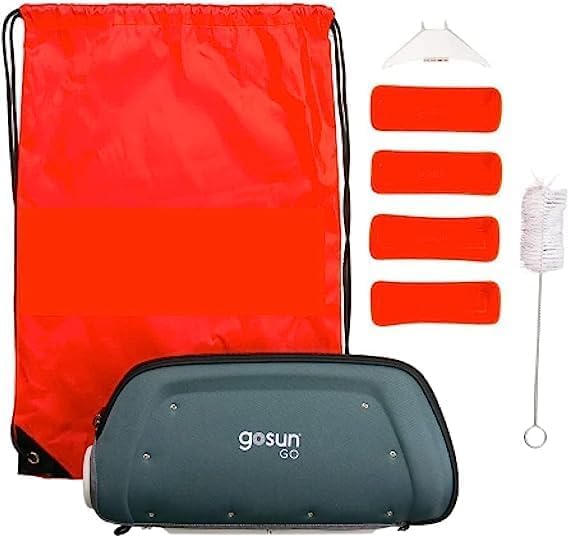
GoSun Sport (~$200–$250 MSRP as of mid-2026) is the brand most solar cooking newcomers encounter first, and for good reason. It uses a different design than a traditional box—a vacuum-sealed glass tube acts as the cooking chamber, and parabolic reflectors focus sunlight into it. The result is a narrower cooking vessel (great for hot dogs, fish, vegetables; awkward for a whole casserole dish) but genuinely impressive heat retention. Outside Online’s portable solar stoves feature called it one of the most beginner-friendly options because setup is fast and results are consistent in clear weather. Owners report regularly hitting 350°F+ on sunny days.
Solavore Sport (~$185–$220 MSRP) is a traditional box-style design: rectangular insulated body, glass lid, included dark granite-ware pots. It’s slower than the GoSun—expect 250°F–300°F on a good day—but its larger interior fits real meal quantities. Long-run owners on homesteading forums consistently describe it as their most-used solar tool precisely because of its set-and-forget simplicity. You load the pots, angle it toward the sun, and come back in two to three hours to a cooked meal. The Treehugger best solar cookers guide rated it highly for families and couples who prioritize hands-off cooking over maximum heat.
All American Sun Oven (~$350–$400 MSRP) stretches slightly past the entry range but appears frequently enough in beginner research that it belongs here. It’s the model Dwell’s off-grid cooking feature pointed to as “the one long-term solar cooks eventually graduate to”—large interior, excellent insulation, and a built-in thermometer. Spec sheets rate it to 400°F under ideal conditions. If you’re serious about solar cooking and live in a high-insolation region, this is where the box cooker conversation often ends.
Panel Cookers
Sport Solar Cooker by Haines Solar and similar flat-panel designs in the $30–$80 range are the ultra-low-stakes entry point. They’re folding cardboard or mylar-coated panels that require a separate dark pot and a turkey oven bag (the plastic sleeve that traps heat around the pot). Solar Cookers International’s documentation includes these in humanitarian and emergency-preparedness contexts precisely because of their near-zero cost. Reviewers consistently describe them as capable of boiling water and cooking rice reliably in full sun—and nearly useless in anything less than ideal conditions.
CooKit (developed in partnership with Solar Cookers International, available for ~$25–$40) is the panel design with the most real-world documentation behind it. It’s been used in tens of thousands of households globally for pasteurizing water and cooking staple meals. Across aggregated reviews and field reports cited by Solar Cookers International, the pattern is clear: the CooKit over-delivers for its price in sunny climates, but demands more user involvement than any box design.
By the Numbers
| Model | Approx. Price (2026) | Typical Max Temp | Interior Capacity | Tracking Required? |
|---|---|---|---|---|
| GoSun Sport | $200–$250 | 350°F+ | ~1.5 L tube | Minimal (every 2 hrs) |
| Solavore Sport | $185–$220 | 250–300°F | Two 1.75 qt pots | Every 1–2 hrs |
| All American Sun Oven | $350–$400 | Up to 400°F | ~1.3 cu ft | Every 25–45 min |
| CooKit (panel) | $25–$40 | 300–350°F (focal point) | 1 pot | Every 20–30 min |
The Real Tradeoffs: What the Review Consensus Gets Right and Wrong
Reviewers tend to oversell solar cookers on convenience and undersell them on the learning curve. Here’s the honest version:
Convenience is real—but conditional. The Solavore Sport and Sun Oven genuinely let you walk away. But “walk away” means “come back and reposition in an hour or two,” not “set it and forget it for the afternoon like a slow cooker.” In early morning or late afternoon sun, angles are steep and performance drops significantly. Plan solar cooking between 10 a.m. and 2 p.m. local solar time for reliable results—Serious Eats’ explainer on how heat source affects cooking performance makes a parallel point about indirect heat: timing and consistency matter as much as peak temperature.
The GoSun tube design has a real limitation newcomers don’t anticipate. Because the cooking chamber is a narrow cylinder, you’re cooking in that shape. Liquids work well. A round casserole dish doesn’t fit. Long-term owners consistently flag this as the reason they eventually add a box cooker to their kit—the GoSun is a great supplemental tool, not a full kitchen replacement.
Panel cookers are for committed users. The $25–$40 price of a CooKit is genuinely appealing, but the time-and-attention cost is the highest of any style. If you won’t cheerfully reposition your cooker every 25 minutes on a hot afternoon, you’ll abandon it. For emergency preparedness or occasional use in ideal sun, it earns its keep. For daily cooking, box cookers are a much better match for most users’ habits.
Accessories matter more than the base unit suggests. Dark-colored, thin-walled pots dramatically outperform standard stainless on solar heat absorption—enamel-coated or granite-ware pots are consistently preferred by experienced solar cooks. Budget $20–$40 for dedicated pots if you buy a Solavore or Sun Oven, and factor that into your true cost.
Decision Framework: If X, Then Y
You’re at the decision point. Here’s how to cut through it.
If you’re in a high-insolation region (Southwest, Southern Rockies, Southern California) and want a true secondary cooking appliance for regular use: Buy the Solavore Sport or All American Sun Oven. The Sun Oven if budget allows and you cook for more than two people; the Solavore if you want to spend less and don’t mind a lower temperature ceiling.
If you’re in a moderate-sun region (mid-Atlantic, Midwest, parts of the South) and want solar cooking for camping, weekend use, or emergency preparedness: The GoSun Sport is your best fit. Its vacuum tube retains heat better in imperfect conditions than an open-box design, and owners in cloudier climates consistently report better results with it than with flat-panel or standard box alternatives.
If you want the absolute lowest-cost entry point to see if solar cooking is for you: A CooKit or similar panel cooker for $25–$40 is a reasonable experiment. Go in knowing the limitations, commit to the tracking requirement, and use it specifically for pasteurizing water, rice, or simple stews. If you enjoy the process, upgrade to a box cooker in year two.
If you’re in Seattle, Portland, or anywhere that gets fewer than 200 clear days per year: Don’t make solar cooking your primary investment right now. Consider a solar cooker a supplemental summer tool at best, and put your outdoor cooking budget toward a wood-fired or hybrid setup that works regardless of cloud cover.
If you’re purchasing for a glamping operation, off-grid retreat, or multi-unit application: The Sun Oven at $350–$400 per unit gives you the most reliable performance-per-dollar for guests who won’t be tracking or repositioning carefully. Budget for trained staff interaction and supplement with a conventional backup for cloudy-day service.
Solar box and panel cookers aren’t magic, and they’re not for everyone. But for buyers in the right climate who go in with realistic expectations, they deliver on the zero-fuel promise with surprising consistency. The key is matching the design—box versus panel, passive versus tracking—to your actual habits, not your best-case intentions. Buy the cooker that fits the cook you are, not the one you plan to become.