If you’ve ever stood in front of a pizza oven wondering whether you grabbed the right bag of wood—or whether you should have bought pellets instead—you’re not alone. Fuel choice is one of the most consequential decisions in outdoor pizza cooking, but it’s also one of the least explained. At its core, a pizza oven needs two things from its fuel: intense, sustained heat (we’re talking 700–950°F on the cooking floor—hot enough to cook a Neapolitan-style pie in 60–90 seconds) and the right combustion behavior to maintain that heat without constant babysitting. The three fuels most commonly used in residential and semi-commercial outdoor ovens—hardwood logs, wood pellets, and charcoal—each hit those targets differently. This guide breaks down the real tradeoffs so you can make the call that matches your oven, your setup, and your cooking style, then actually build the fire that gets results.
The Core Variables: What Fuel Actually Controls
Before running the comparison, it’s worth anchoring to the variables that matter. Fuel affects four things in practice:
Peak temperature and ramp time. How hot can you get the oven, and how long does it take to get there? A longer preheat isn’t just inconvenient—it burns more fuel and delays your first cook window.
Temperature consistency. Once you’re at 800°F, how long does it stay there without active management? This is where fuels diverge most sharply in real use.
Flavor contribution. All combustion produces smoke compounds. Wood smoke contains guaiacol and syringol—the aromatic molecules responsible for the characteristic char-and-forest note on a Neapolitan crust. Pellets and charcoal behave differently here, and the difference is real, not placebo.
Operational friction. Sourcing, storage, moisture management, ash cleanup, and local burn regulations all affect whether your fuel choice is sustainable past the first few cooks.
Hardwood Logs: The Benchmark, With Conditions
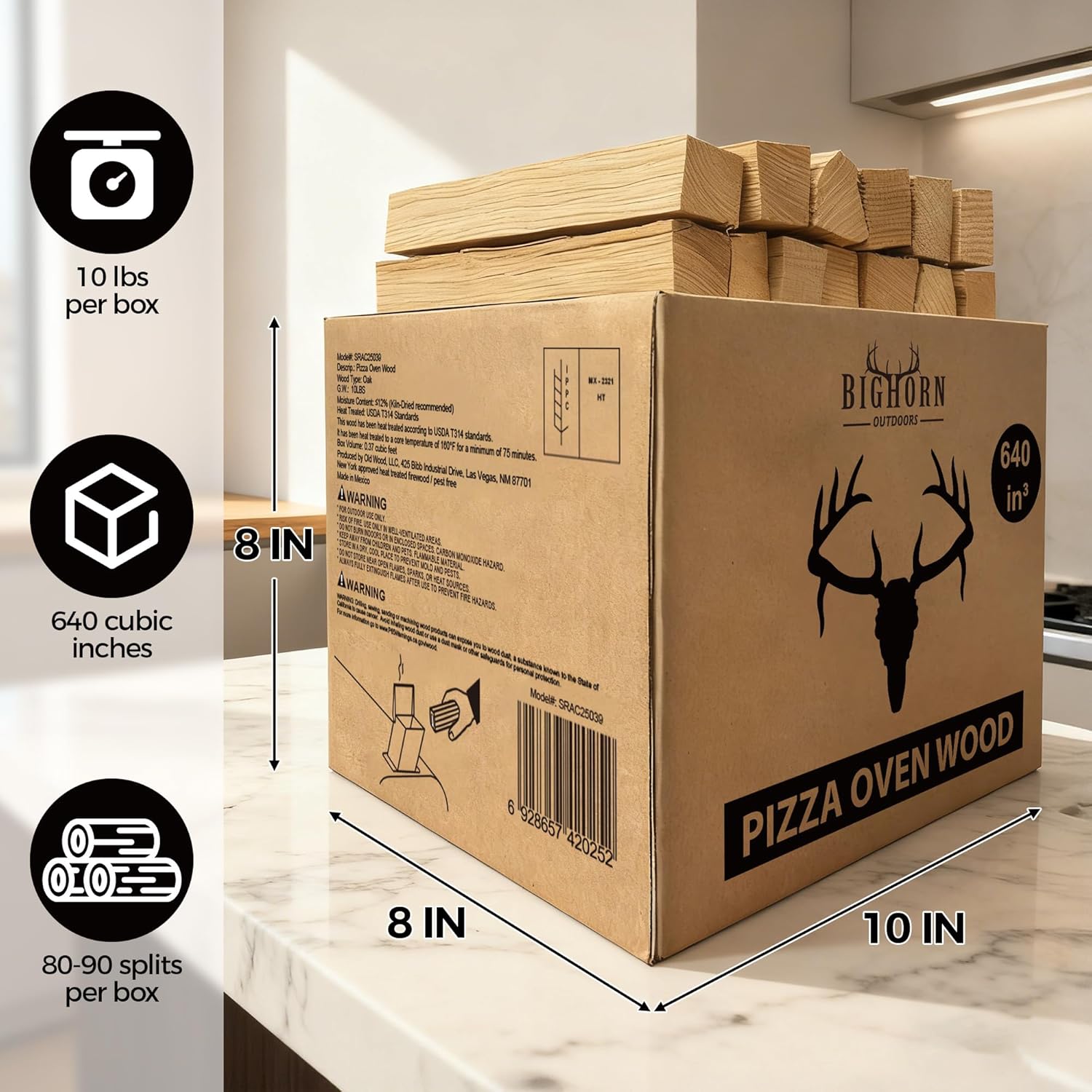
Hardwood—kiln-dried oak, ash, or fruitwoods like apple and cherry—is the traditional fuel for wood-fired pizza ovens, and for good reason. Properly dried hardwood (moisture content below 20%, ideally 15%) burns hot, produces a clean flame, and contributes the aromatic smoke character that’s nearly impossible to fully replicate with processed fuels.
What owners consistently report: Hardwood fires in dome-style ovens like the Gozney Dome or Alfa Forni Classico reach and hold 800–900°F with less active tending than charcoal, largely because the flame itself—not just radiant heat from the floor—is doing work on the crust and dome. Per the Serious Eats overview of wood-fired technique, this convective heat from a live flame is a meaningful contributor to leopard spotting (the blistered, irregular char pattern on Neapolitan crust) in a way that ember-only fuels don’t replicate as naturally.
The critical condition: Moisture content. Wet wood (anything above 25%) doesn’t just burn inefficiently—it smothers the fire, produces acrid smoke, and caps your ceiling temperature. Owners in humid climates (Southeast, Pacific Northwest) consistently flag this as their biggest operational challenge. A moisture meter is a $15–$25 investment that removes all guesswork; if you’re buying split hardwood from a local supplier, test before you load.
The tradeoffs to name explicitly:
- Storage footprint is real. A season’s worth of properly seasoned hardwood takes up space and requires covered, off-ground storage.
- Sourcing is inconsistent. Kiln-dried hardwood is available nationally (brands like Firebrand and Heat-N-Glo ship split logs), but prices vary widely—typically $8–$18 per bundle retail as of mid-2026. Bulk cord pricing is more economical for high-frequency users.
- Regulation risk. Many municipalities and HOA zones restrict open burning or require specific pollution-control periods. This is the one variable that can veto the entire fuel choice regardless of performance preference.
If X, then Y: If you own a dome-style or barrel oven with a large firebox (Gozney Dome, Alfa Classico, Ooni Karu 16 in wood mode), have reliable access to kiln-dried hardwood, and cook more than 4–5 times per season, hardwood is the highest-ceiling choice. The flavor upside is real, and the operational cost is manageable at volume.
Wood Pellets: Convenience at a Real Performance Ceiling
Wood pellets are compressed sawdust—typically oak, hickory, or fruitwood—extruded into uniform cylinders. They were originally designed for pellet grills and smokers, but manufacturers including Ooni have engineered ovens (the Ooni Fyra 12 being the flagship example) specifically around pellet combustion.
By the numbers:
| Fuel | Typical Peak Temp (residential oven) | Preheat Time | Flavor Contribution | Cost per Cook (est.) |
|---|---|---|---|---|
| Kiln-dried hardwood | 850–950°F | 25–45 min | High | $2–$5 |
| Wood pellets | 750–850°F | 15–20 min | Moderate | $1–$3 |
| Lump charcoal | 700–800°F | 20–30 min | Low–Moderate | $2–$4 |
The pellet advantage is operational consistency. Because pellets are uniform in density and moisture content (typically 5–8%), combustion is predictable in a way that split logs aren’t. Owners of the Ooni Fyra 12 note in aggregated reviews that temperature management is more forgiving than hardwood-fired alternatives at similar price points—easier to dial in for cooks newer to live-fire technique.
The honest ceiling: Pellets don’t reach the same peak temperatures as hardwood in comparably sized fireboxes, and they don’t carry the same flavor profile. The Bon Appétit guide to high-heat pizza cooking notes that the aromatic complexity from hardwood combustion comes partly from the longer, more variable burn—the kind of irregular flame and ember interaction that extruded pellets smooth out by design. If your target is strict Neapolitan authenticity at 900°F-plus, pellets are a compromise.
Storage and sourcing advantage: 20-lb bags of food-grade hardwood pellets are widely available at hardware retailers and online, store in a fraction of the space of split logs, and have an indefinite shelf life when kept dry. Per Wirecutter’s outdoor pizza oven coverage, this accessibility is a primary reason pellet-specific ovens over-index with urban and suburban buyers who don’t have the storage or sourcing infrastructure for bulk hardwood.
If X, then Y: If you own a pellet-optimized oven (Ooni Fyra 12), cook in an urban or space-constrained environment, and prioritize repeatable results over absolute peak temperature or traditional smoke flavor, pellets are the right operational choice. Don’t force pellets into an oven not designed for them—the feed dynamics and airflow assumptions differ enough to create frustrating temperature plateaus.
Lump Charcoal: The Underrated Hybrid Option
Lump charcoal—irregularly shaped pieces of hardwood that have been carbonized in a low-oxygen environment—is less commonly discussed in the pizza oven context, but it earns serious consideration in multi-fuel ovens like the Ooni Karu 16.
What lump charcoal does well: It burns hotter and longer per unit weight than wood pellets, generates relatively low smoke (because most volatile compounds burned off during carbonization), and produces a long-lasting, stable ember bed that’s excellent for extended cook sessions. Food & Wine’s comparison of wood versus charcoal combustion notes that lump charcoal’s even radiant heat makes it particularly effective for cooking styles that require sustained floor temperature—think multiple pizzas in sequence, or using the oven for bread and roasting after the pizza course.
What it doesn’t do: Lump charcoal produces minimal aromatic smoke. You’re not getting the guaiacol hit that defines wood-fired flavor. You can partially address this by adding a few small hardwood chunks to the ember bed (a technique commonly used in kamado-style cooking and documented in Serious Eats’ charcoal cooking guides), but it’s a workaround, not a replacement.
Sourcing notes: Quality varies significantly. Reviewers across multiple outlets consistently flag that lower-grade lump charcoal includes excessive fines (dust and small fragments that restrict airflow) and inconsistent piece sizing that creates hot spots. The pattern in long-run operator reviews points toward brands that hold consistent piece sizing—look for “restaurant-grade” labeling and check for a high percentage of large, irregular pieces over fine material.
Regulatory upside: In jurisdictions that restrict wood burning based on air-quality rules (a growing condition in California, Colorado’s Front Range, and parts of the Pacific Northwest), charcoal often falls under different permitting than open wood fires. If you’re in a regulated zone, this is worth verifying with your local air district before committing to a wood-primary setup.
If X, then Y: If you own a multi-fuel oven (Ooni Karu 16 in charcoal/wood mode, or a kamado hybrid), cook long sessions with multiple dishes, or operate in a smoke-restricted zone, lump charcoal—supplemented with hardwood chunks for flavor—may be your best practical answer. It’s also the most forgiving fuel for intermediate cooks still calibrating their fire management, because the ember bed is more stable than a live wood fire and less sensitive to wood moisture variability.
Getting the Fire Right: The Decision Rule Applied
The fuel choice resolves cleanly once you answer three questions:
-
What oven do I have? Pellet-optimized ovens (Ooni Fyra 12) aren’t built for hardwood logs. Multi-fuel ovens (Ooni Karu 16, Gozney Dome) give you genuine flexibility. Dome-style and barrel ovens designed for split wood (Alfa Classico, most traditional masonry builds) reward hardwood most.
-
What’s my sourcing and storage reality? Kiln-dried hardwood is the highest-performance option, but it requires consistent sourcing and storage that not every setup supports. Honest assessment here prevents buying a premium fuel that degrades in a damp garage and burns poorly.
-
What’s my primary cooking goal? Traditional Neapolitan authenticity at maximum temperature → hardwood. Consistent, repeatable weeknight results with lower operational friction → pellets. Extended cooking sessions, multi-fuel versatility, or smoke-regulated environments → lump charcoal with optional wood supplement.
One operational note that applies across all three fuels, drawn from patterns in long-run owner reviews: preheat time is non-negotiable. Rushing a pizza oven to temperature produces uneven floor heat regardless of fuel type. The floor—which is where crust color and structure actually form—needs to fully saturate with heat, not just the air temperature register high. Most experienced operators run 30–45 minutes minimum for hardwood and charcoal in full-size ovens, even when the thermometer reads target temperature sooner. Pellet ovens with smaller fireboxes (Ooni Fyra 12) can reasonably achieve floor saturation in 15–20 minutes, but that’s an oven-architecture advantage, not a fuel one.
The fire management intuition that separates good pizza from great pizza is built over sessions, not articles. But getting the fuel match right from the start means you’re building that intuition on a stable foundation—not compensating for the wrong combustion profile every time you fire up.